Showing posts with label design. Show all posts

Mar 7, 2013

Burill at Beach

In december, there was this nice exhibition of Anthony Burill at Beach London
So good that he will be in Offenbach for Afterschoolclub II (ASC) soon.


Feb 4, 2013

design collective GRAPUS (1970–91)


For 20 years they provided inspiration to graphic design 
students all over the world, with their idealistic principles 
(of bringing culture to politics, and politics to culture), 
and their highly distinctive form of image-making: an 
accessible and unpredictable mixture of childlike scrawl, 
bright colors, sensual forms and high-spirited visual pranks. 

(McQuiston, Liz (1993) Graphic agitation : 
social and political graphics since the Sixties 
London: Phaidon. p.56)


-----
The design collective Grapus was founded during
the student revolts in France in 1968. Members
were Pierre Bernard, Gerard Paris-Clavel, Francois
Miehe, Jean-Paul Bachollet and Alex Jordan.
In graphic design, on the one hand they saw a
means of bringing the protests and social ideas
forward and on the other hand they wanted to
re-invent the function of graphic design itself from
being a selling tool to a tool that communicates
visions of living together and social change.

http://www.aubervilliers.fr/rubrique113.html
http://www.noustravaillonsensemble.org/1789.html.fr

be idealistic.

 A sunday evening (night) with upcoming goodbye-feelings is a good
time to be idealistic (although I think that it's always and in general
good to be idealistic and optimistic as well). So, designers and everybody
else: Lets take part in the wish to create a better world. 


Feb 1, 2013

3 things to keep in mind

--------------1---------------
--------------2---------------
--------------3---------------


favourite picture of the punk graphic design exhibition 
(see blog post punk / graphic / design)

seen in Peckham 2 days ago

found it while researching screenplay-covers

Jan 15, 2013

8 days, 8 posters

Last friday, we started the 'A Poster a Day' project. This means, that there is an email with a new poster task every day. The email arrives around 8–10 am. We have 24 hours to fulfill it. Its nice to receive these emails with the mission of the day. Today, for example, it said: 

Poster 3: For public information.
Create a poster from a piece of advice that someone once gave you

 
(start by summarising the advice into one sentence or phrase). 
With the brief, we got some texts about posters.
I realize that what I love about the poster, and what defines poster-ness for me, is the way it is conceptually attached to a motivating force — a product, or some event that will happen or has happened on a particular date and at a particular place. Temporal and physical fixity are integral parts of the visual language of the poster, anchors that help prevent it from floating into the ether of art. Ultimately it's the tension between those anchors and the tug of the designer's artistic ambition that produces the powerful, beautiful poster.  
Design Observer / Alice Twemlow: When Did Posters Become Such Wallflowers?

Design Observer / Alexandra Lange: Stop That: Minimalist Posters

Susan Sontag: Posters: Advertisement, Art, Political Artifact, Commodity
Looking Closer 3, Michael Bierut, ed. (Allworth Press, New York, 1999), pp. 196-218

Jan 3, 2013

ask questions!


Yesterday, we went to the Natural History Museum. (By the way, a lot of other people did this). I really liked some of the exhibition design styles and the way, you are trained to ask questions. Although you expect from a museum visit like this to get answers, I always go out with more questions in my head. I think, we should ask more questions in general. It is a valuable culture we have to keep and to train.

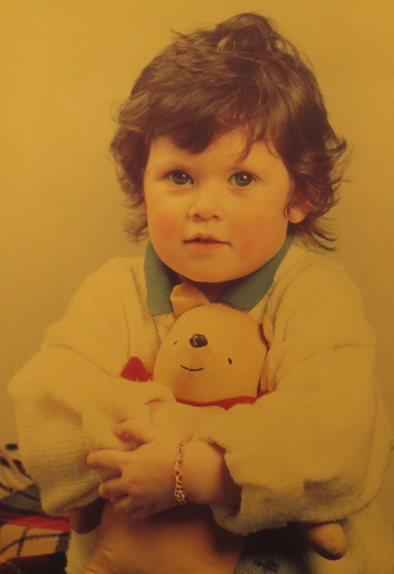
 For a toddler, a single toy may become a close companion.

Nov 11, 2012

stationeries #2


I just couldn't resist them. How they are meant to be equal and
how different they are. The paper. The colour. The type.
And finally I know where the name of this website comes from:
http://pleasedonotbend.co.uk/

Nov 10, 2012

Mr. Mike Mills

from: Gasbook 11 MIKE MILLS, published in Japan 2003


    I like how he thinks about graphic design and the things he does, too.


from: MIKE MILLS Graphics/Films (2009)

Oct 27, 2012

punk / graphic / design


When was there, I felt like most designs I do and see are so "inhuman",
which means too much computer, so clean and not lively. So lets go back
to human! These thoughts are obviously affected by the work of Mike Mills, 
which I was watching last week. Later on -- more about him.


There'll 
probably 
be some 
music, but
we'll manage
to find 
a quiet
corner 
where we
can talk.


(finally, a nice quote from the exhibition) 

Oct 22, 2012

pure beauty

most döner kebab
signs are very
abstract here

Oct 17, 2012

mystery


Where are the people, that make designs like this?
If you see them, tell them that they are doing fine. I like it.
But: I want to meet them to get to know more about how
they decide that a writing pad should exactly look like this.


Oct 13, 2012

Reading List #1


THE FORM OF THE BOOK BOOK
Edited by Sarah de Bondt and Fraser Muggeridge
Occational Papers (click here for more nice books)

7 essays about designing books and about embracing your ideas. We spent some time together last weekend (on a trunk of a tree, in a park, in the sun). One of those books, I want to own, after reading it. Small and handy, full of enjoyable content, designed for reading, something you like to hold in your hands.

Some appetizers: /(...) where does the designer draw the line between engagement with content and pure decoration?(p23)/Ideally, all books start with a question. The clearer the question, the more precise the answer, but this is rarely the case. You have to find out, what the question is. (...) As designers we are as responsible for content
as anyone else. (p85)/Design and content need to go hand in hand, like a perfect 
dance. (...) /Be clear who you are, what you believe in and do not try to be someone
else. Stick to your ideas. Embrace them. However impulsive or intuitive they might be, they are your treasures. Rely on the inner feeling that what you look for will work, that it will be alright. Use your imagination to make the book that does not exist yet. It could be your best book ever.(p89)

Oct 7, 2012

ASPEN magazine (!)

The magazine in a Box 
Made a mind-broadening discovery in Whitechapel Gallery: ASPEN MAGAZINE.
I strongly recommend you to do some research.

*1965-1971 *10 issues *Art, Design, Music, Film, Theory *in a Box *every issue
designed individually *editorial Freedom *Andy Warhol, David Dalton,
Peter Blake, Robert Rauschenberg, Robert Morris,Yoko Ono, John Lennon, Marcel
Duchamp, Roland Barthes, Susan Sontag, Marcel Duchamp, David Hockney,
John Lennon, Lou Reed, Quentin Fiore, Laszlo Moholy-Nagy …


LINKS

Exibition at Whitechapel Gallery 
11.09.2012 - 03.03.2013

Pat Matthews Gallery (Gallery 4)
First multi -media magazine and became a time capsule of the period.
! watch the video introduction

A portrait of ASPEN, the original magazine in a box. by Emily King 
032C Issue #6 — Winter 2003/2004 / Page No. 82 - 8
Aspen functioned on the principle of family resemblance rather than that of uniformity: there is enough in common between issues for them to be 
understood as part of the same body of work, but each issue is very different
from all the others.
Emily King is a London-based author, curator, and design critic
Reading Time: about 21 minutes.

Overview and digital content of all the issues at UbuWeb
If Aspen was an art director's dream, it was also an advertiser's nightmare.